




Pronunciation: nuh-SU-toe-SEH-ruh-tops
Meaning: Big-nosed horn face
Author/s: Lund et al. (2013)
Synonyms: None known
First Discovery: Utah, USA
Acta Ordinal: #843
Nasutoceratops titusi
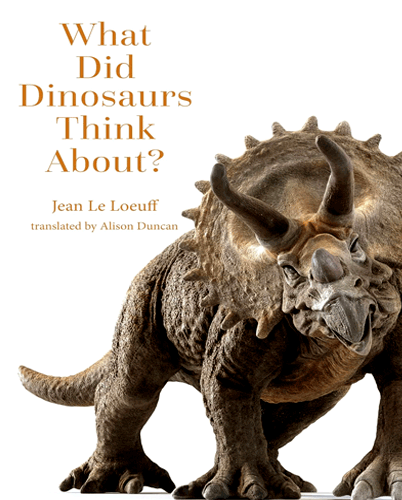
Initially named Nasutuceratops (with an extra "u") in the thesis of Karl Lund in 2011, Nasutoceratops (with an extra "o" instead) was officially described in 2013, but it's just the same as it was, name aside.
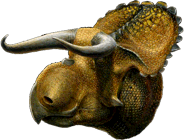
It was discovered by Lund in Utah, which has been a bit of a hotspot for ceratopsid (horn faced) dinosaur discoveries over recent years, but it hadn't had a sniff of a centrosaurine ceratopsid until Nasutuceratops reared its bulbous-snouted head with curved, forward-pointing horns, much like those of a modern cow.
More coming soon...
More coming soon...
(Alan Titus' big-nosed horn face)Etymology
Nasutoceratops is derived from the Latin "nasutus" (large-nosed) and the Greek "ceras" (horn) and "ops" (face).The species epithet, titusi, honours Alan Titus, a palaeontologist at Grand Staircase-Escalante National Monument, for his exemplary efforts assisting palaeontological fieldwork in the area. ZooBank registry: urn:lsid:zoobank.org:act:F9997290-2618-4C95-9D46-7EED00C99916.
Discovery
 The remain of Nasutoceratops were discovered in the Middle Unit of the Kaiparowits Formation, Grand Staircase-Escalante National Monument, southern Utah, USA, by Karl Lund in 2006.
The holotype (UMNH VP 16800) includes a nearly complete skull (1.8 m long), a left forelimb, a partial right forelimb, and three partial back vertebrae.
Referred materials consist of a partial adult skull (UMNH VP 19466) and an isolated cheek bone (UMNH VP 19469).


