




Pronunciation: EE-o-ah-BEL-i-SOR-us
Meaning: Dawn Abelisaurus
Author/s: Pol and Rauhut (2012)
Synonyms: None known
First Discovery: Chubut, Argentina
Acta Ordinal: #818
Eoabelisaurus mefi
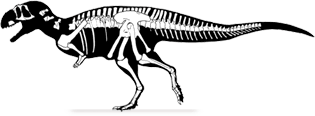
By just a single mark during cladistic analysis, Eoabelisaurus scraped into Abelisauridae: the carnivorous, ceratosaurian dinosaurs with high and short skulls, pitifully small forearms, and heavily pneumatized (aero-textured) bones# that were common in Gondwana during the Cretaceous but are exceedingly rare finds in the Northern Hemisphere#. The presence of a large, virtually uncrossable central Gondwanan desert during Pangean times, long before the split of the Northern and Southern Hemisphere continents, could explain why they and their extended, archaic family—the abelisauroids—are apparently unique to the south. And while the discovery of Eoabelisaurus has done nothing to buck that trend, it did trump what was previously the oldest secure member of its clan by some forty million years, and in doing so, pushed their origin way back into the Middle Jurassic.
Etymology
Eoabelisaurus is derived from the Greek "Eos" (dawn) and "Abelisaurus", in reference to the fact it represents an early relative of "Roberto Abel's Lizard".The species epithet, mefi, honors the Museo Paleontológico Egidio Feruglio (Mef)—the Patagonian Paleontologic Museum where Diego Pol is active.
Discovery
The remains of Eoabelisaurus were discovered at "Jugo Loco" in the Cañadón Asfalto Formation near Cerro Cóndor Village, Chubut Province, Argentina, by Diego Pol in 2009.
The holotype (MPEF PV 3990) is a nearly complete skeleton and partial skull.


