



Date of Birth: July 28, 1840
Place of Birth: Philadelphia, Pennsylvania
Parents: Alfred and Hanna Cope (Stepmother: Rebecca Biddle)
Spouse: Annie Pim (his distant cousin)
Date of expiry: April 12, 1897 (aged 56)
Place of expiry: Philadelphia, Pennsylvania
Legacy: "Cope's rule", Camarasaurus, Coelophysis,
Prolific vertebrate descriptions across multiple clades
Prolific vertebrate descriptions across multiple clades
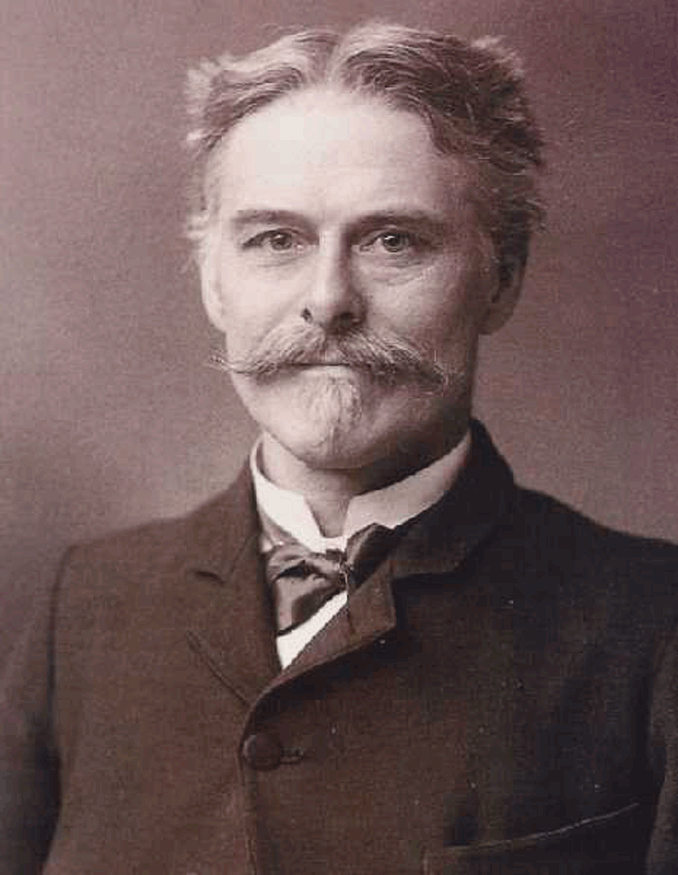
Edward Drinker Cope
Edward Drinker Cope was born on 28 July 1840 in Philadelphia, the eldest son of Alfred and Hanna Cope, into a wealthy Quaker family whose shipping fortune ensured that young Edward never lacked books, travel, or opportunity. His mother died when he was three, but his stepmother Rebecca Biddle raised him with warmth. His father — an orthodox Quaker with firm ideas about vocation — initially tried to raise him as a gentleman farmer, sending him to relatives’ farms each summer in the hope he would follow in his own footsteps. Cope resisted every attempt to steer him toward agriculture; even as a boy he preferred sketching animals, cataloguing specimens, and filling notebooks with observations. Biographer Jane Davidson later described him as “a bit of a spoiled brat” — brilliant, indulged, impulsive, and accustomed to getting his way. In 1865 he married Annie Pim, his distant cousin, a match typical of Philadelphia’s interwoven Quaker families. By nineteen he had published his first scientific paper, a review of salamanders, with the Academy of Natural Sciences. His education was eclectic: some formal study at the University of Pennsylvania, anatomy under Joseph Leidy, and endless hours in museums and libraries. He was, from the beginning, a prodigy who preferred specimens to classrooms.
Cope's early career blended brilliance with impatience. After a brief professorship at Haverford College (1864–67), he abandoned academic life for the field, joining geological surveys across the American West. He discovered and described an astonishing number of extinct vertebrates — nearly a thousand species by some counts — ranging from Cretaceous reptiles in Kansas to Tertiary mammals in Wyoming and Colorado. His monumental Vertebrata of the Tertiary Formations of the West became a landmark of American paleontology. He worked out evolutionary histories of horses and mammalian teeth, and championed kinetogenesis, a Lamarckian theory proposing that habitual movement shaped anatomical evolution.
But Cope’s name is inseparable from the Bone Wars, his bitter rivalry with Othniel Charles Marsh. What began as collegial competition escalated into accusations of bribery, spying, fossil theft, and sabotage — including the famous tale that Marsh dynamited a quarry rather than let Cope see it. Cope himself suffered a spectacular embarrassment when he mistakenly reconstructed Elasmosaurus with its head on the tail; Leidy corrected him publicly, and Marsh never let him forget it. Yet Cope’s response was characteristic: he simply worked faster. He published more than 1,300 papers in his lifetime — a record still unmatched — though critics noted that his haste sometimes led to errors.
For all the chaos that surrounded his career, Cope left a dinosaur legacy as sprawling and unruly as the man himself. He named Camarasaurus in 1877 — now one of the best-known sauropods — and described early material of Coelophysis, the lithe Triassic predator later immortalized at Ghost Ranch. He tangled repeatedly with Marsh over Apatosaurus, whose remains he also worked on during the Bone Wars, and he coined names that later dissolved into synonymy, such as Agathaumas, once hailed as the largest land animal in North America, and Manospondylus, a fragmentary theropod now recognized as an early name for Tyrannosaurus rex. His most tantalizing creation was Amphicoelias fragillimus, a sauropod so enormous that if his measurements were accurate, it would still rank as the largest land animal ever known — but the only specimen crumbled to dust shortly after discovery, leaving behind nothing but Cope's notes and a century of speculation. Even his theoretical work left a mark: Cope's Rule, the idea that animal lineages tend to evolve toward larger body sizes over time, emerged from his writings and became one of paleontology’s most enduring (if debated) evolutionary patterns. In the end, his dinosaurs — the valid, the dubious, the vanished, and the visionary — form a catalogue as energetic and contentious as Cope himself, a testament to a man who named species at full gallop and reshaped the fossil record in his wake.
Cope's financial life was as dramatic as his scientific one. When his father Alfred died in 1875, Cope inherited nearly a quarter of a million dollars, a fortune that could have secured him for life. Instead, he burned through it with astonishing speed. Some of the loss came from extravagant scientific spending — buying fossils outright, funding expeditions, maintaining multiple households, and curating a private museum at his own expense. Some came from lifestyle and impulsive generosity, the habits of a man unaccustomed to restraint. And the final blow came in the 1880s, when he poured what remained of his fortune into speculative mining ventures in the Southwest. These collapsed spectacularly, forcing him to sell much of his fossil collection and accept a professorship at the University of Pennsylvania in 1889 to stabilize his finances. Still, his final years saw a resurgence of productivity and recognition. He continued to publish, to name species, and to argue — often fiercely — for his evolutionary ideas. When he died on 12 April 1897, he willed his body to science, hoping his skeleton would be measured to test his own theories of genius.
Edward Drinker Cope was not a diplomat, nor a patient man, nor a careful one. But he was a force of nature: a prodigious writer, a tireless collector, and one of the most influential paleontologists of the nineteenth century. His discoveries helped define the fossil record of the American West, and his fierce, flawed, brilliant energy shaped the discipline itself. Beneath the rivalry, the haste, the financial chaos, and the occasional tantrum was a scholar whose passion for ancient life burned at a pace few could match — and none could ignore.
Ironically, the ornithopod dinosaur Drinker nisti, named by Bakker et al. in 1990 in honour of Cope, turned out to be synonymous with the ornithopod called Nanosaurus, which was named by his fierce rival, O. C. Marsh.
Cope's early career blended brilliance with impatience. After a brief professorship at Haverford College (1864–67), he abandoned academic life for the field, joining geological surveys across the American West. He discovered and described an astonishing number of extinct vertebrates — nearly a thousand species by some counts — ranging from Cretaceous reptiles in Kansas to Tertiary mammals in Wyoming and Colorado. His monumental Vertebrata of the Tertiary Formations of the West became a landmark of American paleontology. He worked out evolutionary histories of horses and mammalian teeth, and championed kinetogenesis, a Lamarckian theory proposing that habitual movement shaped anatomical evolution.
But Cope’s name is inseparable from the Bone Wars, his bitter rivalry with Othniel Charles Marsh. What began as collegial competition escalated into accusations of bribery, spying, fossil theft, and sabotage — including the famous tale that Marsh dynamited a quarry rather than let Cope see it. Cope himself suffered a spectacular embarrassment when he mistakenly reconstructed Elasmosaurus with its head on the tail; Leidy corrected him publicly, and Marsh never let him forget it. Yet Cope’s response was characteristic: he simply worked faster. He published more than 1,300 papers in his lifetime — a record still unmatched — though critics noted that his haste sometimes led to errors.
For all the chaos that surrounded his career, Cope left a dinosaur legacy as sprawling and unruly as the man himself. He named Camarasaurus in 1877 — now one of the best-known sauropods — and described early material of Coelophysis, the lithe Triassic predator later immortalized at Ghost Ranch. He tangled repeatedly with Marsh over Apatosaurus, whose remains he also worked on during the Bone Wars, and he coined names that later dissolved into synonymy, such as Agathaumas, once hailed as the largest land animal in North America, and Manospondylus, a fragmentary theropod now recognized as an early name for Tyrannosaurus rex. His most tantalizing creation was Amphicoelias fragillimus, a sauropod so enormous that if his measurements were accurate, it would still rank as the largest land animal ever known — but the only specimen crumbled to dust shortly after discovery, leaving behind nothing but Cope's notes and a century of speculation. Even his theoretical work left a mark: Cope's Rule, the idea that animal lineages tend to evolve toward larger body sizes over time, emerged from his writings and became one of paleontology’s most enduring (if debated) evolutionary patterns. In the end, his dinosaurs — the valid, the dubious, the vanished, and the visionary — form a catalogue as energetic and contentious as Cope himself, a testament to a man who named species at full gallop and reshaped the fossil record in his wake.
Cope's financial life was as dramatic as his scientific one. When his father Alfred died in 1875, Cope inherited nearly a quarter of a million dollars, a fortune that could have secured him for life. Instead, he burned through it with astonishing speed. Some of the loss came from extravagant scientific spending — buying fossils outright, funding expeditions, maintaining multiple households, and curating a private museum at his own expense. Some came from lifestyle and impulsive generosity, the habits of a man unaccustomed to restraint. And the final blow came in the 1880s, when he poured what remained of his fortune into speculative mining ventures in the Southwest. These collapsed spectacularly, forcing him to sell much of his fossil collection and accept a professorship at the University of Pennsylvania in 1889 to stabilize his finances. Still, his final years saw a resurgence of productivity and recognition. He continued to publish, to name species, and to argue — often fiercely — for his evolutionary ideas. When he died on 12 April 1897, he willed his body to science, hoping his skeleton would be measured to test his own theories of genius.
Edward Drinker Cope was not a diplomat, nor a patient man, nor a careful one. But he was a force of nature: a prodigious writer, a tireless collector, and one of the most influential paleontologists of the nineteenth century. His discoveries helped define the fossil record of the American West, and his fierce, flawed, brilliant energy shaped the discipline itself. Beneath the rivalry, the haste, the financial chaos, and the occasional tantrum was a scholar whose passion for ancient life burned at a pace few could match — and none could ignore.
Ironically, the ornithopod dinosaur Drinker nisti, named by Bakker et al. in 1990 in honour of Cope, turned out to be synonymous with the ornithopod called Nanosaurus, which was named by his fierce rival, O. C. Marsh.
References
• Cope ED (1877) "On a Gigantic Saurian from the Dakota epoch of Colorado". Paleontological Bulletin, 26: 5–10. [Camarasaurus supremus.]
• Cope ED (1889) "On a new genus of Triassic Dinosauria". The American Naturalist, 23(271): 626. DOI: 10.1086/274979. [Coelophysis.]
• Bakker RT, Galton PM, Siegwarth J and Filla J (1990) "A new latest Jurassic vertebrate fauna, from the highest levels of the Morrison Formation at Como Bluff, Wyoming. Part IV. The dinosaurs: A new Othnielia-like hypsilophodontoid". Hunteria 2(6): 8-19. [Drinker nisti.]
• Davidson J (1997) "The Bone Sharp: The Life of Edward Drinker Cope". Academy of Natural Sciences.
• Osborn HF (1931) "Cope: Master Naturalist: The Life and Letters of Edward Drinker Cope with a Bibliography of His Writings Classified By Subject".
• Polly PD and Alroy J (1998) "Cope's Rule". Science, 282 (5386): 50–51. DOI: 10.1126/science.282.5386.47f.
• Hone DW and Benton MJ (2005) "The evolution of large size: how does Cope's Rule work?". Trends in Ecology and Evolution, 20(1): 4-6. DOI: 10.1016/j.tree.2004.10.012.
• Flynn K (2016) "Annie Pim commonplace book, 1857-1864". library.haverford.edu
https://library.haverford.edu/finding-aids/files/MC-975-03-029.pdf.

Discoveries and descriptions ...


